

Westminster Abbey stands as one of London’s most iconic landmarks and a living piece of British history, where kings and queens have been crowned for nearly a thousand years and where some of the nation’s greatest figures rest for eternity. With its blend of royal drama, literary legends, scientific pioneers, and architectural wonders, Westminster Abbey provides families with an opportunity to explore nearly a millennium of British heritage in a single visit. Find out everything you need to know about visiting Westminster Abbey with children in this guide.
Westminster Abbey: the essentials
What is Westminster Abbey?
Westminster Abbey is a historic church that stands as one of Britain’s most significant religious and cultural landmarks.
Westminster Abbey was built between the 13th and 16th centuries in the Gothic style on the site of an earlier monastery established by St Edward the Confessor in the 1040s, the Abbey has served as the coronation church for every English monarch since William the Conqueror in 1066, with only two exceptions (Edward V (the boy king), who was presumed murdered in the Tower of London before he could be crowned, and Edward VIII who abdicated 11 months after succeeding his father and before the date set for his coronation.).
Westminster Abbey has also been the setting for a number of royal weddings, including that of Queen Elizabeth II and Prince Phillip, and Prince William and Kate Middleton. It was also the church where Queen Elizabeth II’s funeral was held.
Beyond its role in royal ceremonies, Westminster Abbey functions as both a place of daily worship and a national shrine to British history. It houses the tombs of kings and queens, including the medieval shrine of St Edward the Confessor, as well as memorials to countless famous figures from poets and scientists to warriors and musicians.
Today, the Abbey continues its traditions of regular worship and hosts significant national ceremonies, maintaining its unique position as a living church that bridges Britain’s medieval past with its modern present.
Where is Westminster Abbey?
Westminster Abbey is located (unsurprisingly) in Westminster, just minutes from the Houses of Parliament and Big Ben.
How much does it cost to go in Westminster Abbey?
As at June 2025, entrance to Westminster Abbey costs:
- Adult – £30
- Child (6-17 years) – £13
- Child (0-5 years) – free
- Families (1 adult and 1 child) – £30
Various concession tickets are available, including Universal Credit tickets (see our post for more attractions that offer discounts for those in receipt of Universal Credit and other benefits).
There is also an additional cost of £5 per adult to visit the Queen’s Diamond Jubilee Galleries (free for under 17s and Association Members). This can either be booked at the time of booking your main tickets or you can pay before entering the Galleries.
TOP TIP: If you buy an online ticket via the Westminster Abbey website you can upgrade it to an annual pass free of charge. This will enable you to visit the Abbey three times for the price of one. Ask for your ticket to be upgraded to an annual pass when visiting and then you can visit up to three times in one year. Pre-booking is not required for subsequent visits. This is particularly helpful with kids as it means that you don’t necessarily need to try and see everything in one visit.
Do you need tickets for Westminster Abbey?
Unless you are a member of the Abbey Association (in which case you can show your membership card for entry), you will need tickets in order to visit Westminster Abbey.
Pre-booking is strongly advised as they do often reach capacity for entrance.
When is Westminster Abbey open?
Westminster is generally open most days at the following times:
Monday – Friday: 9.30am – 3.30pm (last entry)
Saturday: 9.00am – 3.00pm (last entry)
Sunday: Open for services
Westminster Abbey is a living working church and so there may be times when they close off some areas to the public and times when they are closed or offer reduced opening hours. Check the website for changes or planned closures.
Getting to Westminster Abbey
What is the nearest tube to Westminster Abbey?
The nearest Tube station to Westminster Abbey is Westminster (Circle Line, District Line and Jubilee Line). Slightly further away are St James’s Park (Circle and District Lines) and Waterloo (Bakerloo Line, Jubilee Line, Northern Line and Waterloo & City Line).
Several bus routes also stop nearby.
How do you get into Westminster Abbey?
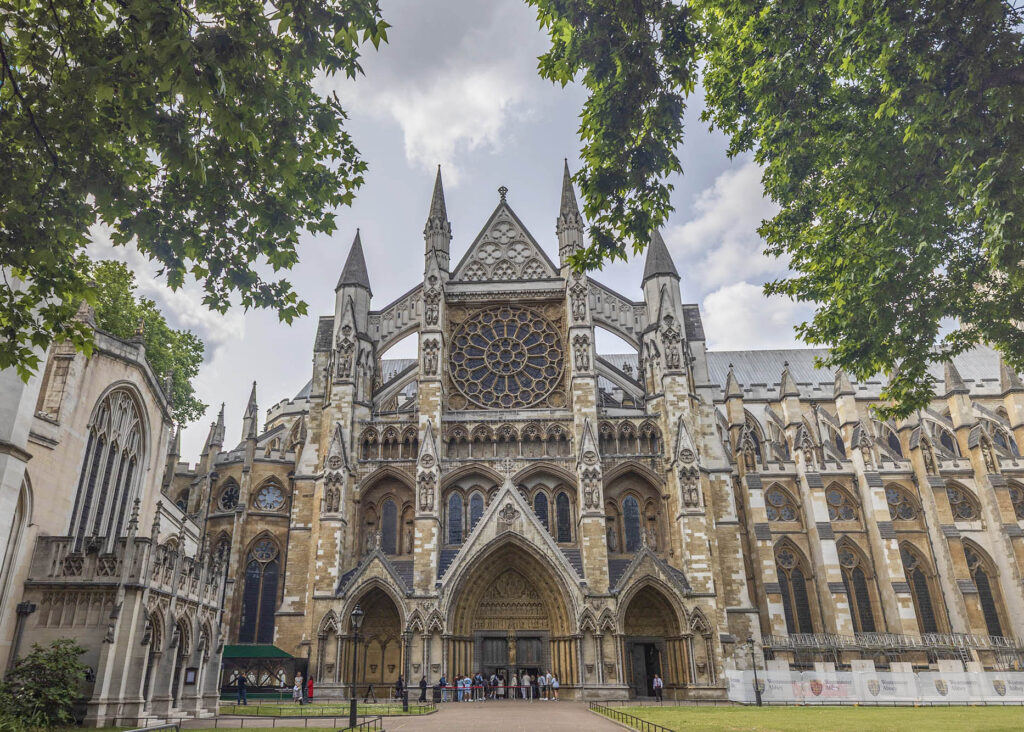
The entrance to Westminster Abbey is accessed via St Margaret Street. This is the street that runs along the eastern edge of the Abbey, directly opposite the Palace of Westminster (Houses of Parliament). Entry to the Abbey is then through the Northern door, with security taking place before entry.
Do I have to queue for Westminster Abbey?
Depending on when you arrive, you may need to queue in order to enter Westminster Abbey. You will need to go through some basic security bag and ticket checks before entering.
At Westminster Abbey
What is there to see at Westminster Abbey?
In addition to the various side chapels and memorials, Westminster is comprised of the following main areas:
- The Nave and the Quire (choir stalls);
- The Lady Chapel;
- The Queen’s Diamond Jubilee Galleries;
- Poets’ Corner; and
- The Cloisters.
The Nave and the Quire
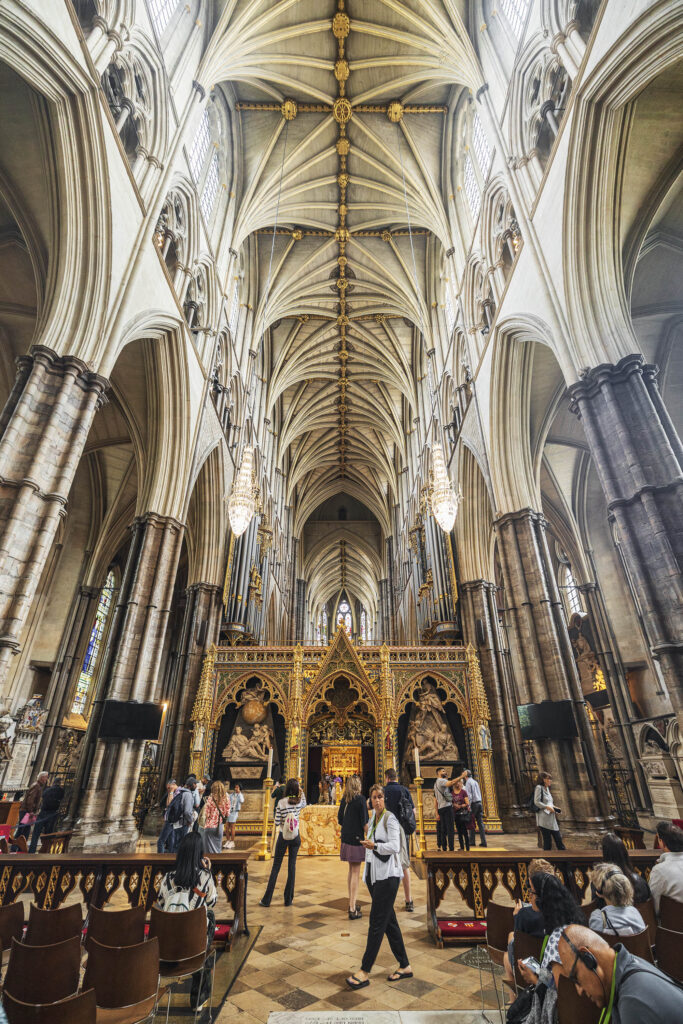
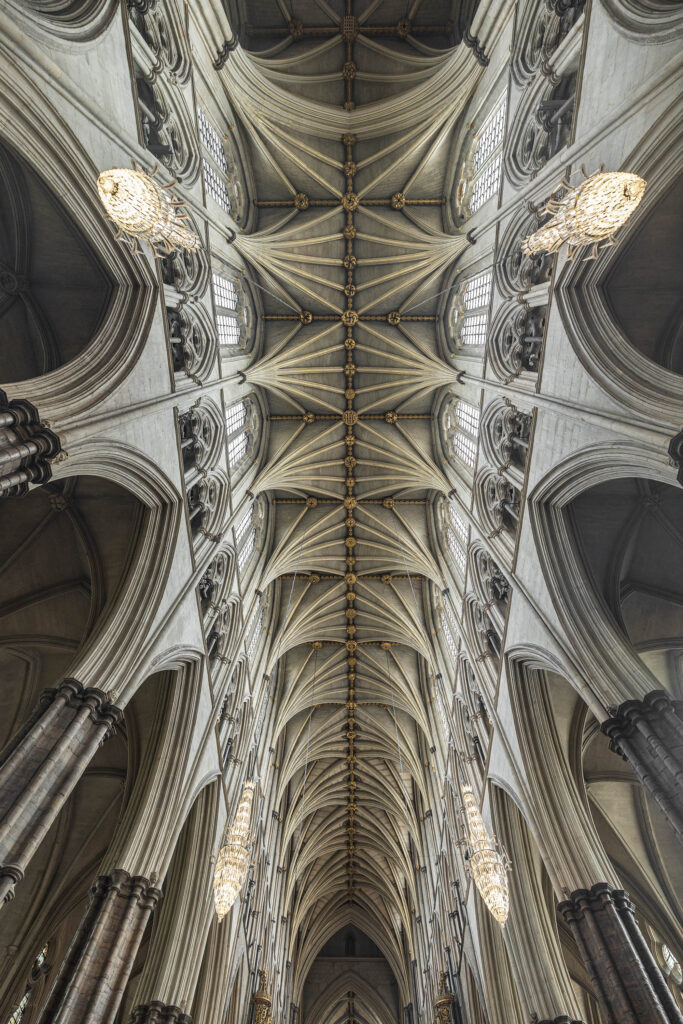
The Nave forms the western end of Westminster Abbey and serves as both an architectural masterpiece and a remarkable repository of British history, containing the graves and memorials of many of the nation’s most celebrated figures.
Construction of the present Gothic nave spanned nearly 150 years, beginning in 1376 under master mason Henry Yevele after Henry III’s original building project remained incomplete at his death in 1272, and was finally finished in 1517.
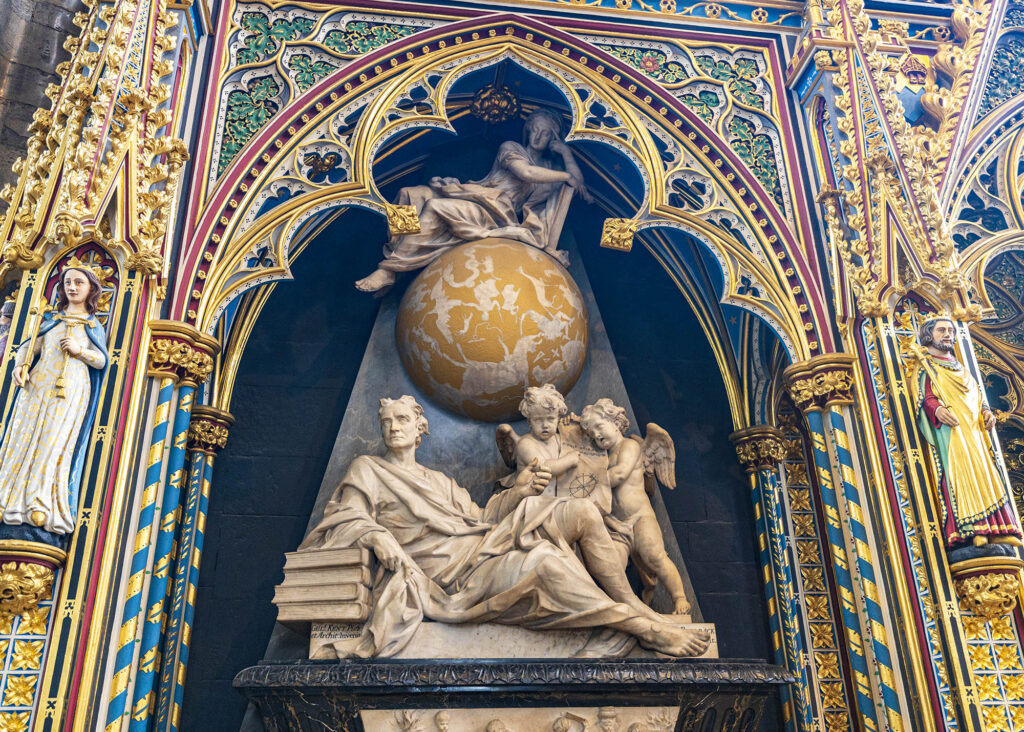
The nave houses an extraordinary collection of burials, including Charles Darwin, Sir Isaac Newton (whose monument adorns the decorated Quire screen), and Professor Stephen Hawking, alongside explorer David Livingstone, engineer Thomas Telford, architect Sir Charles Barry, and Prime Minister Clement Attlee.
At the western end lies the grave of the Unknown Warrior, surrounded by red poppies to commemorate the countless fallen of World War I, with nearby memorials to Winston Churchill and Franklin D. Roosevelt.
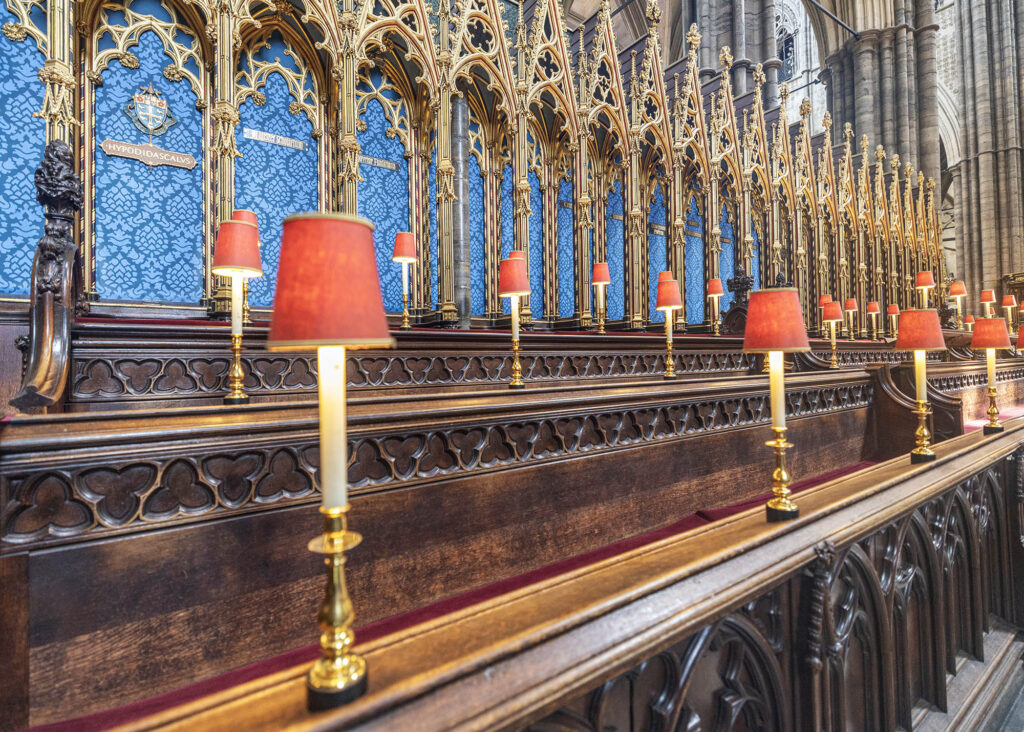
The Lady Chapel
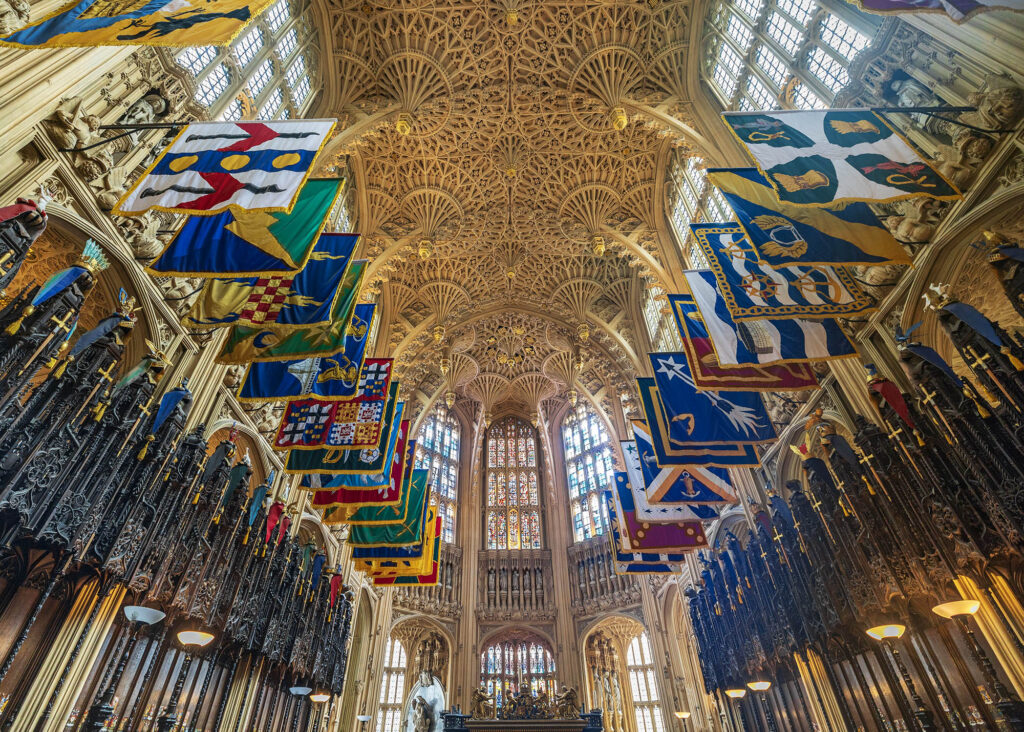
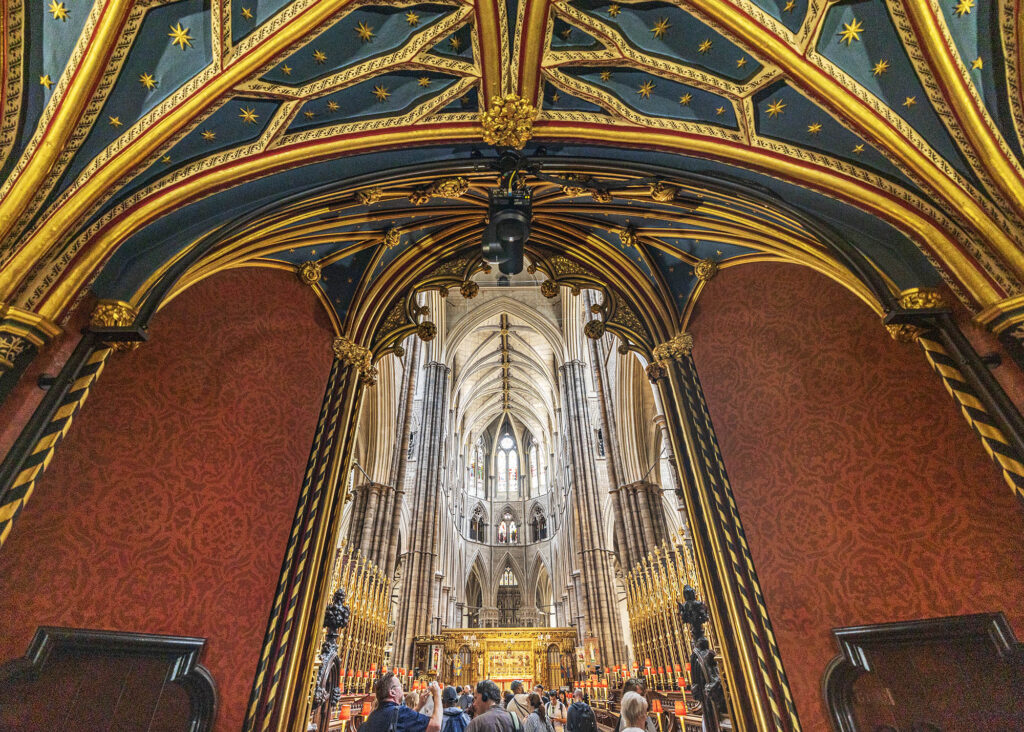
The Henry VII Lady Chapel is one of Westminster Abbey’s most breathtaking spaces and stands as a glorious testament to late medieval architecture with its spectacular fan-vaulted ceiling adorned with intricate carved pendants.
Commissioned by Henry VII in 1503 and completed in 1516, six years after his death, this magnificent chapel serves as the final resting place for fifteen monarchs, including Elizabeth I, Mary I, Mary Queen of Scots, and the presumed remains of the ‘Princes in the Tower’ – Edward V and Richard Duke of York – while beneath the central aisle lies the Hanoverian vault containing George II and his family, and the south aisle houses the Stuart vault with Charles II, William III, Mary II, and Queen Anne.
The chapel’s eastern end is dominated by Henry VII’s imposing tomb, featuring magnificent gilt bronze effigies of the king and Elizabeth of York.
Since 1725, the chapel has served as the installation venue for Knights of the Order of the Bath, with colorful banners of living knights hanging beneath the soaring vaulted ceiling and brass plates bearing coats of arms attached to the wooden stalls. The walls are adorned with 95 statues of saints, while the eastern end features the Royal Air Force chapel with Hugh Easton’s stained glass window depicting fighter squadron badges from the 1940 Battle of Britain.
The Queen’s Diamond Jubilee Galleries
NB. Entrance is at an additional cost of £5 per adult, children aged 17 and under are free). Abbey Association members also visit free. Tickets can be purchased on the door of the Jubilee Galleries.
The Queen’s Diamond Jubilee Galleries represent the first major built addition to Westminster Abbey in more than 250 years. They transform the Abbey’s medieval triforium (located seven storeys above the abbey’s nave) into an exhibition space.
They not only provide space for display but the most astonishing views of the interior of the Abbey from above (although do note that photos are not permitted in the Diamond Jubilee Galleries). You also get a great view of parts of the Abbey roof.
The Galleries display 300 treasures from the Abbey’s collection, reflecting the Abbey’s thousand-year history. Among the remarkable artefacts on display are the Westminster Retable (1259–69), the oldest surviving altarpiece in England from Henry III’s Abbey; 21 funeral effigies from the 14th to early 17th centuries, including Henry VII’s effigy head which was modelled on his death mask; and the royal marriage licence for Prince William and Kate Middleton in 2011.
Poets’ Corner
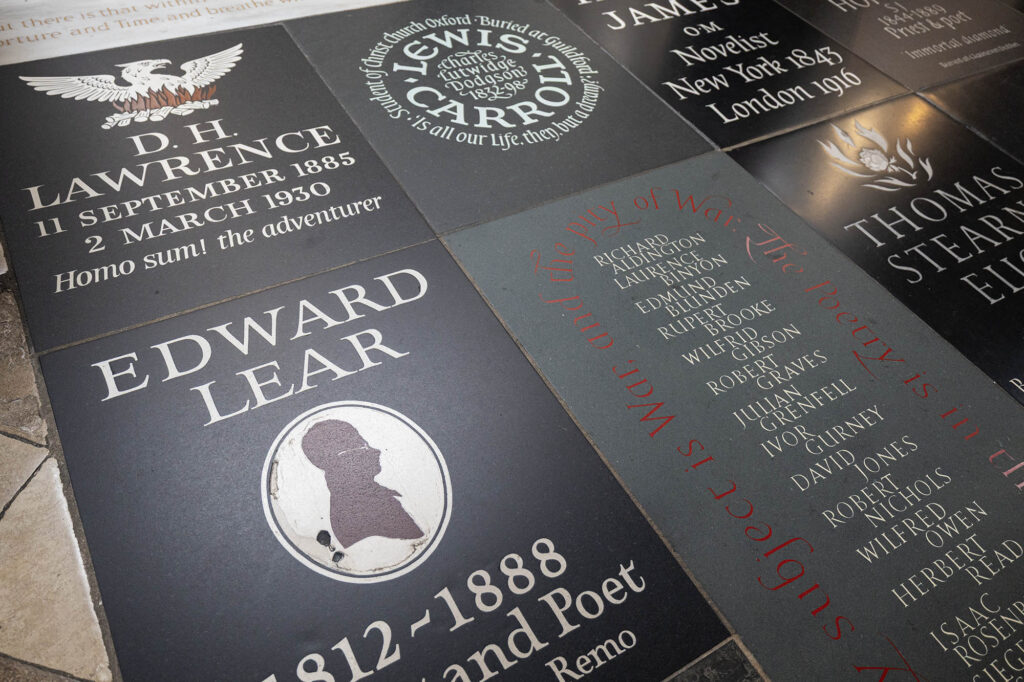
Poets’ Corner, located in the south transept of Westminster Abbey, stands as a place of pilgrimage for literature lovers worldwide, housing the graves and memorials of more than 100 poets and writers.
The tradition began somewhat by accident in 1400 when Geoffrey Chaucer, author of ‘The Canterbury Tales’, was buried here not for his literary achievements but because he served as Clerk of the King’s Works. Nearly 200 years later Edmund Spenser, an author, deliberately requested burial near Chaucer with a clear eye toward his own literary legacy. This established a tradition of burials and memorials that continues today, with the Deans of Westminster deciding placements based on merit after wide consultation.
World-famous figures like William Shakespeare, Jane Austen, the Brontë sisters, Charles Dickens, Rudyard Kipling, and Thomas Hardy are remembered alongside writers who, though popular in their day, are now less well known.
Poets’ Corner has expanded over time to encompass graves and memorials throughout the entire transept, which also houses several clergymen, actors, and notably the composer George Frederic Handel, making this space a remarkable testament to British literary and cultural achievement.
Cloisters
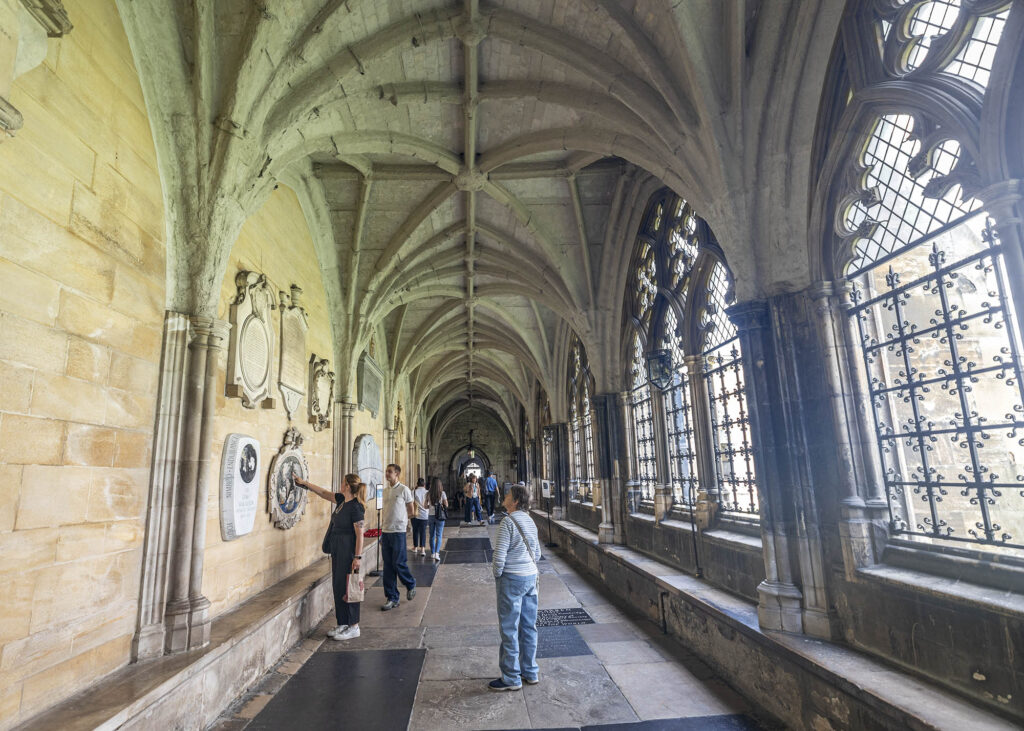
The Cloisters at Westminster Abbey were once among the busiest areas of the Abbey, where Benedictine monks spent much of their daily lives in meditation, exercise, and study.
Now giving Harry Potter Hogwarts vibes, the cloisters serve as a peaceful memorial space containing graves of former abbots, clergy, organists, workmen, and actors who were denied burial in the main church. They also sometimes host activities for children, like, as we saw when we visited, paper crane origami making.
What facilities are there for children at Westminster Abbey?
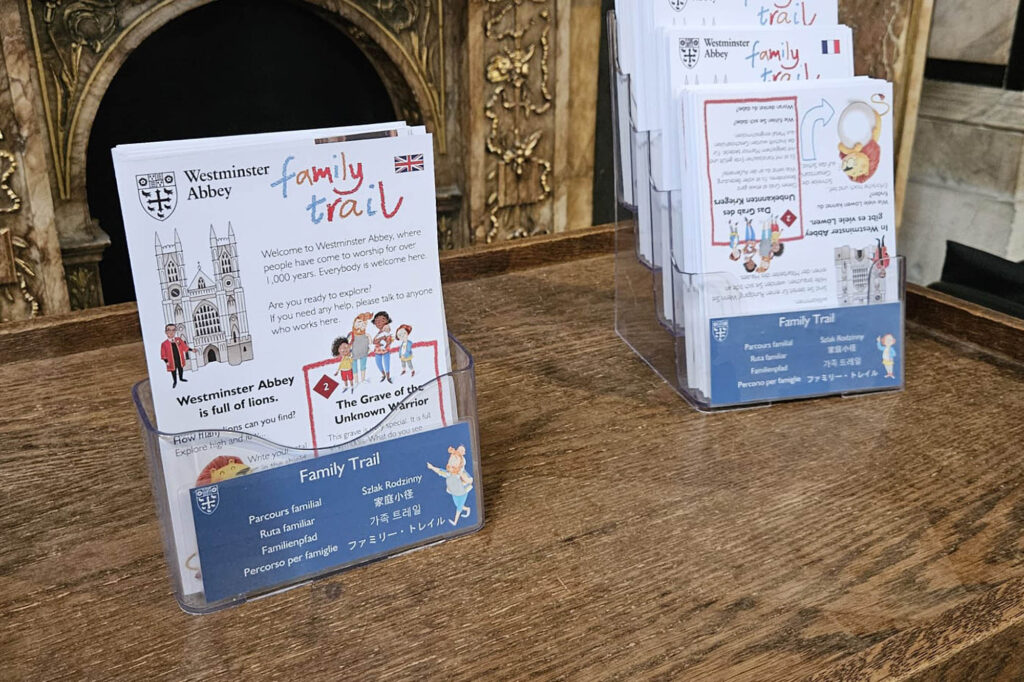
To help make a visit to Westminster Abbey more fun and accessible for younger children, Westminster Abbey offers a free family trail to help explore the church. These can be picked up on arrival and children can collect a free badge from the shop after completing it.
There is also a child-friendly version of the audio guide, which is delivered via iPhone. Audio guides can also be picked up at the entrance to the Abbey.
You are able to take pushchairs into Westminster Abbey, but do note that some areas have steps and that the Abbey is likely to be busy. There is no buggy parking.
Baby changing facilities are available.
How long can you spend at Westminster Abbey?
There’s no limit on how long you can spend there, but there’s basically a one-way system operated within the Abbey, so realistically there’s only so long you will spend there as once you move past an area, you move on. Do note that due to the one-way system, there will be times where your pace will be, to an extent, dictated by the number of other people there. At busier times expect your visit to take longer than if visiting at quieter times.
Excluding any time queuing and going through security, you can probably expect your visit to take around an hour to an hour and a half to visit the main Abbey. If you choose to add on the Queen’s Diamond Jubilee Galleries then you can probably expect to add on another 20-30 minutes.
Can you eat in Westminster Abbey?
You are not allowed to eat in Westminster Abbey other than in the Cloisters where you can eat a packed lunch, or in the cafe, where you can buy a variety of food.
Breastfeeding is welcome throughout the Abbey.
Is there a question you have about visiting Westminster Abbey with children that we haven’t answered here? Let us know in the comments and we’ll do our best to address it.

